Regeneración en las relaciones públicas. Pasamos de los sistemas mecánicos a los sistemas vivos.
En el seminario web EUPRERA Talks, moderado por Isabel Ruiz Mora (profesora asociada de la Universidad de Málaga y una de las organizadoras del Congreso EUPRERA 2026), tres voces distinguidas exploraron el concepto de regeneración en las relaciones públicas. Bel Barroso (investigadora de la Universidad de Málaga y cofundadora de la consultora Chronopios), Evandro Oliveira (director ejecutivo y fundador de Gaudere, investigador de LabCom y profesor de la Universidad de Derby y de los programas de grado y máster de la London Metropolitan University) y Rune Schanke-Eickhoff (director ejecutivo de la consultora de innovación Tinkr e investigador doctorado de la Norwegian Business School) invitaron a los participantes a reconsiderar los fundamentos mismos de las relaciones públicas. Su mensaje central fue claro: las organizaciones deben pasar de modelos mecánicos de pensamiento a enfoques de sistemas vivos basados en una mentalidad regenerativa.
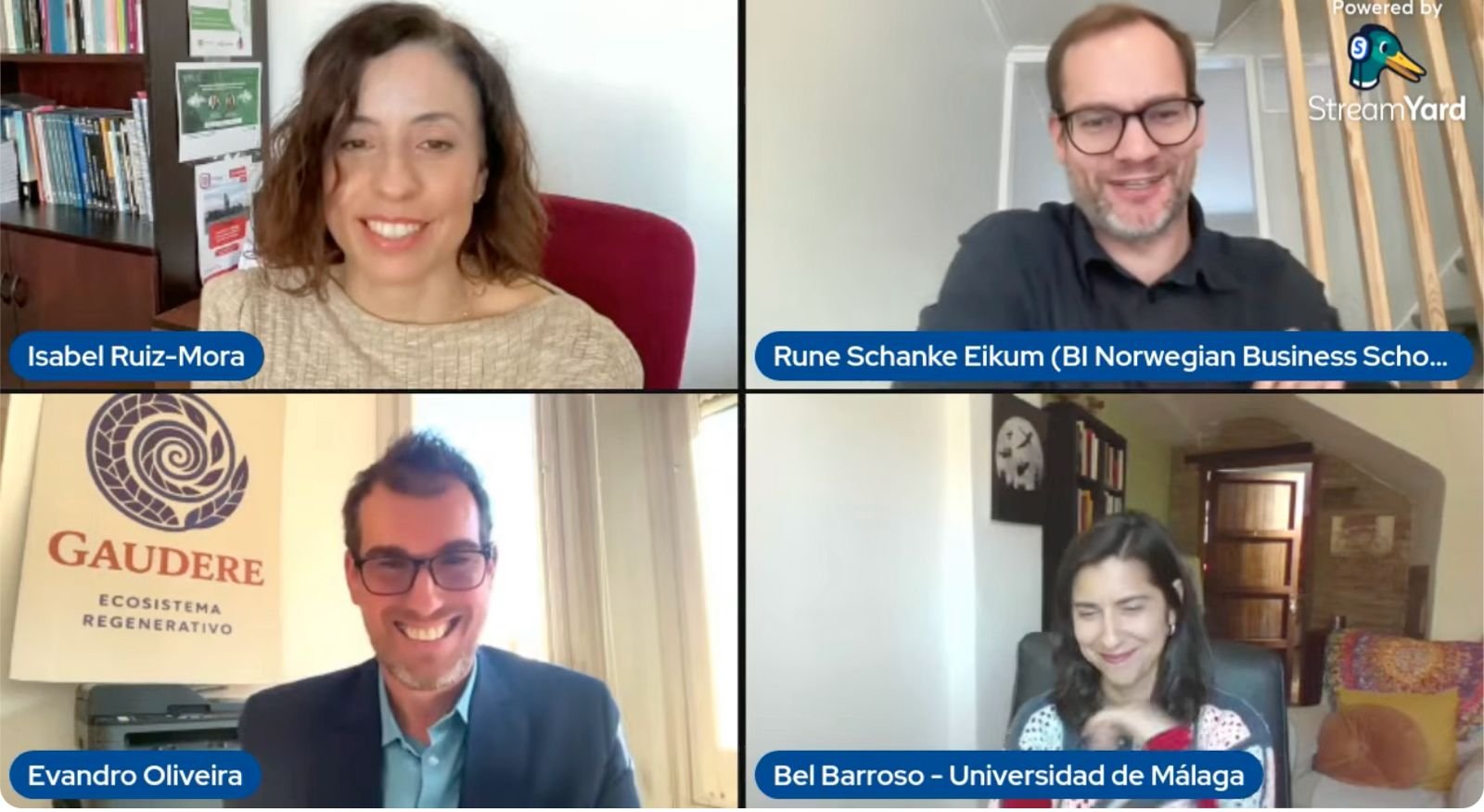
En su intervención, Bel describió tres fenómenos que impulsan la urgencia del cambio. En primer lugar, habló de «el gran olvido», en referencia a nuestra separación de la naturaleza, a pesar de que nosotros mismos formamos parte de ella. En segundo lugar, destacó la erosión de la confianza dentro de las estructuras jerárquicas, cada vez más sustituida por el miedo y el control. Por último, abordó la supresión de la inteligencia y la sensibilidad «femeninas», estrechamente relacionadas con la capacidad de escucha, que permiten que florezcan cualidades como el cuidado, la intuición y la conciencia relacional.
Evandro profundizó en el debate haciendo hincapié en que la regeneración comienza con la identidad y la conciencia organizativas. Si una organización no sabe quién es, no puede actuar con autenticidad y, cuando actúa sin conocerse a sí misma, corre el riesgo de aparentar coherencia en lugar de encarnarla. Primero hay que ser, luego actuar y, por último, comunicar. La comunicación no puede compensar un yo organizativo fragmentado.
Los ponentes coincidieron en destacar que la sostenibilidad y la regeneración no son sinónimos. La sostenibilidad se centra en reducir el daño y mantener los sistemas existentes, mientras que la regeneración busca restaurar y mejorar activamente la vitalidad, la salud y la integridad de los sistemas vivos en los que se sustentan las organizaciones. En lugar de aspirar a tener un «impacto menos negativo», la regeneración se esfuerza por obtener resultados positivos netos.
A partir de esta distinción, Rune propuso una forma práctica de diferenciar la ambición regenerativa genuina del greenwashing: buscar pruebas de que una organización opera de forma coherente «según los términos de la naturaleza», en lugar de limitarse a utilizar un lenguaje basado en la naturaleza en sus comunicaciones. Para ilustrarlo, puso como ejemplo una piscifactoría terrestre y explicó cómo su fundador entiende el éxito como un equilibrio dinámico entre los peces, las personas, la naturaleza y la comunidad local. Este compromiso de múltiples partes interesadas debe mantenerse a través de decisiones y prácticas cotidianas, y no limitarse a reflejarse en mensajes externos.
Pasando de la teoría a la práctica, las prácticas regenerativas también se pueden implementar en las organizaciones a través de un marco de cuatro pasos:
Escuchar: comprender cómo la organización forma parte de su ecosistema respectivo.
Identificar los puntos débiles: examinar los ritmos, las tensiones, los procesos de aprendizaje, la gobernanza, el liderazgo y los patrones de comunicación dentro de la organización.
Experimentar: empezar poco a poco y probar cambios diseñados para aumentar la vitalidad.
Medir y aprender: hacer un seguimiento de lo que funciona y adaptarse en consecuencia manteniendo la salud del sistema como objetivo central.
Para los profesionales de las relaciones públicas, la regeneración supone un reto para el sector, ya que debe ir más allá de las dimensiones tradicionales de la gestión de la confianza y la reputación, y avanzar hacia una administración responsable, una conciencia sistémica y una coherencia auténtica. El seminario web concluyó con un poderoso recordatorio: la regeneración no tiene que ver con la perfección, sino con la mejora continua y gradual de la coherencia y la vitalidad.
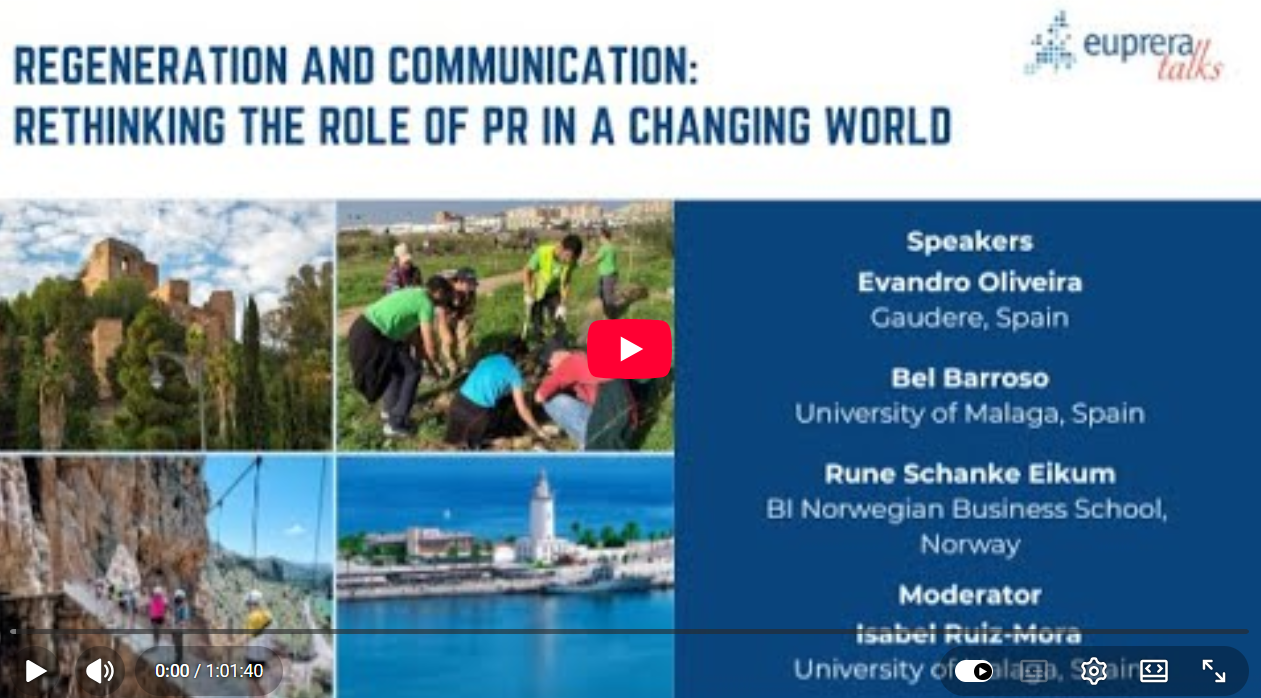
Para ver el seminario web completo, haga clic en el video:
Para la elaboración de este blog se utilizaron datos y herramientas de procesamiento del lenguaje.